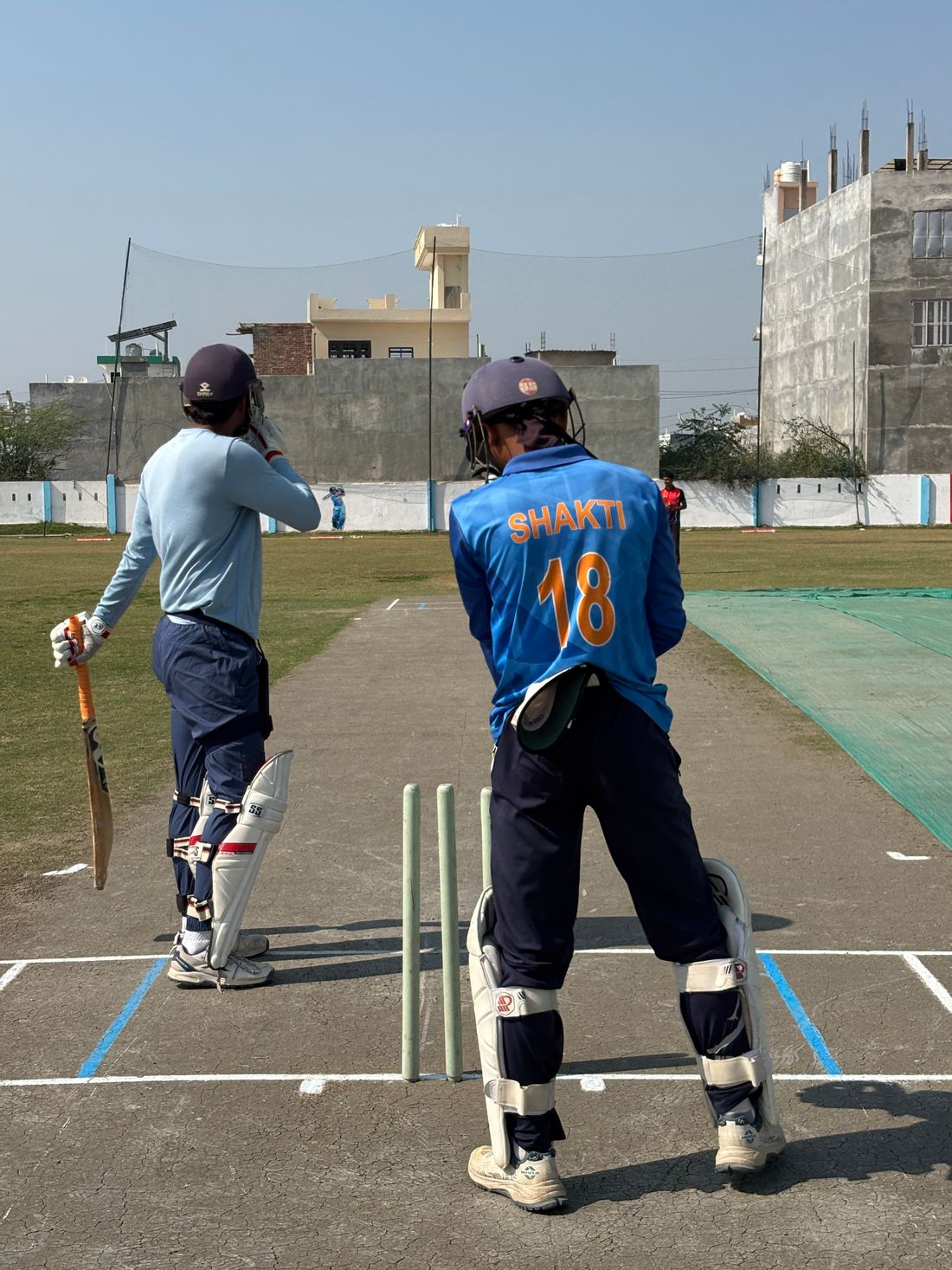
Give the feeder a clear job
For batting, specify the intended bounce and line. For catching, define the receiving height and distance. For ground fielding, use controlled rolls before introducing awkward bounces. A constantly changing feed makes it difficult to know whether a miss came from the player’s movement or from an exercise beyond the planned difficulty.
Agree a feed contract before swapping roles
A partner can help most when the intended feed is specific enough to reproduce. Name the ball, distance, receiving area and permitted variation. For batting, state whether the task is a particular stroke or a play-or-leave decision. For catching, distinguish a known receipt from an uncertain direction task. Mark a feed outside the agreed range separately; it may be a legitimate new challenge, but it does not answer the same technical question.
- Performer: say which cue you are testing and whether the feed remains manageable.
- Feeder: repeat the intended task instead of making the next ball harder after every success.
- Observer, if available: describe one visible event rather than offering several competing corrections.
- Both players: stop for retrieval and explicitly announce any change in activity or intended pace.
How do two players practise batting safely?
Use an appropriate soft ball, a clear area and a feeding distance that suits both people. A controlled underarm feed can isolate a movement without needing full bowling pace. The feeder must have a safe position and route away from a hit. Hard-ball net practice requires the right enclosure, protection and supervision; a partner alone does not make any setting appropriate.
An adjustable thirty-minute two-player example
One possible outline is five minutes to check the space, warm up gradually and agree a task; ten minutes of alternating gentle catching sets; ten minutes of rolled pickup and controlled return; and five minutes to repeat a familiar set and write a next-step note. Treat those blocks as an example, not a required workload. Switch performer and feeder within each main block rather than making one player feed for the whole session. If the catching task needs longer explanation, shorten or remove the second activity. This outline deliberately avoids prescribing bowling volume. The aim is equal useful attention and a clear comparison, not finishing a timetable regardless of comfort or control.
A batting-and-fielding pair session
One player can feed a suitable soft ball toward a controlled batting target while the other practises a selected movement, provided the feed position and return path are safe. After a short set, switch roles and move to a separate rolled-fielding task. Keep each objective explicit. The batter should not suddenly hit at full power toward a feeder expecting a gentle return. Stop before changing drills and explain the new roles. Good two-person practice depends on shared expectations as much as on the number of balls delivered.
Replace vague advice with an observable cue
Instructions such as focus more or be confident can be difficult to act on. A cue such as watch the ball into the hands gives the receiver something specific to test. Ask the player to choose or restate the cue, then observe a short set without adding more instructions. Afterward compare what each person noticed. This creates a conversation about the movement rather than a stream of judgement and helps a less experienced feeder provide useful support without pretending to be an expert coach.
How to handle a disagreement about technique
Begin with the observed result rather than insisting one person’s preferred style is universally correct. Ask what the player intended, what the ball did and where control was lost. Repeat a manageable version with one cue and compare. If the issue remains unclear, seek appropriate coaching instead of layering contradictory instructions. Partners can provide valuable feeding, counting and observation without pretending to diagnose every action. Keeping that boundary clear protects the session from becoming an argument and leaves room for the player to describe what they actually experienced.
Compare partners fairly without forcing equal difficulty
Two players can share an exercise while using different receiving ranges. One may work on predictable straight soft feeds; the other may add a small lateral choice. Keep those versions labelled. Comparing raw catch totals from different tasks does not establish who improved more or who is the better player. The useful comparison is each player’s result under conditions they can repeat.
Suppose the first partner receives comfortably but the second keeps turning away. The answer is not to insist that both use the same pace. Reduce the second task and ask what the player could see. Another pair might disagree because one counts recovered juggles as clean catches. Resolve the definition before the next set rather than arguing over totals afterward. At the end, each player should state one observation, not a verdict on the other person’s talent. A cooperative session produces a clearer next task for both people while leaving expert diagnosis to appropriately qualified coaching.
A practical example
For a catching session, complete ten soft-ball straight feeds, ten alternating slightly left and right, then ten unannounced choices at the same gentle pace. Compare clean receipts across sets instead of increasing speed whenever a catch succeeds.
Sources & scope
These are general skill explanations and illustrative practice suggestions. Adapt to the player, ball, surface and available supervision. Use suitable protective equipment for hard-ball practice; a qualified coach can assess individual technique.