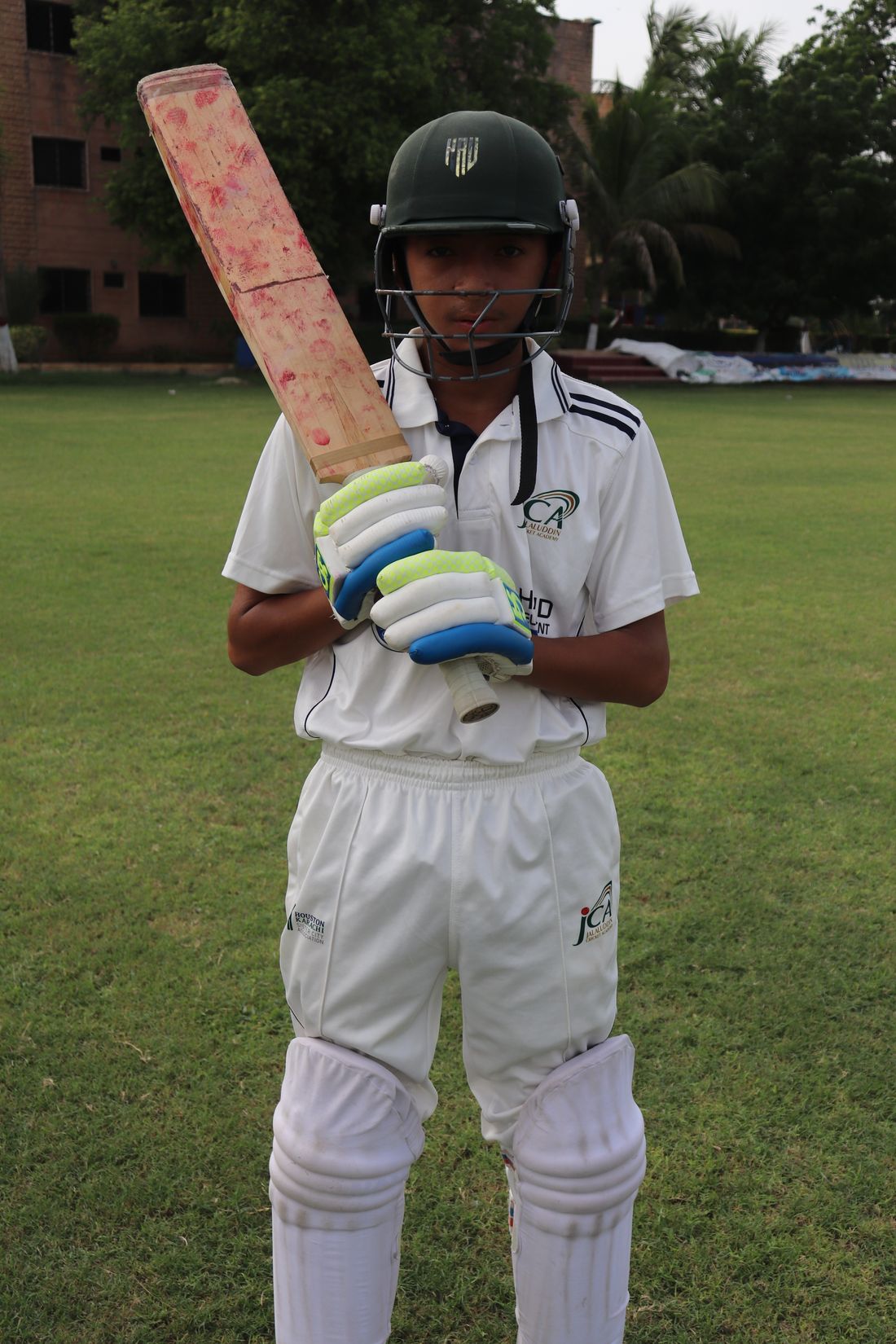
Ask what cricket the child will actually play
Find out whether the sessions use a foam ball, a tennis ball, another soft training ball or a leather ball. Bat compatibility changes with that answer. Do not assume that a bat sold in a junior bundle is suitable for every ball. Check whether the club has loan bats so the child can gain experience before buying. The first purchase should serve a known activity rather than an adult’s imagined future competition.
Measure height and compare nearby sizes
Use current standing height and the chosen manufacturer’s chart. Age labels can help organise a range but should not decide the fit. Try the suggested size and, if necessary, its neighbour with gentle supervised movements in a clear area. Watch the child take stance, lift the bat and bring it back down in control. A child may say a large bat feels fine because they want it, so observation matters as well as enthusiasm.
Give weight and pickup their own check
Within a suitable length, compare several weights or profiles. The child should not need to pull the shoulders back or use a tense grip just to move the bat. Avoid exhausting strength tests or asking for a maximum swing. Several easy straight movements reveal more about ordinary handling. If the coach notices compensations that disappear with a lighter bat, take that seriously rather than blaming every difficulty on concentration or lack of effort.
Why buying to grow into can be false economy
A large bat can remain in use for longer while being unhelpful throughout much of that time. Poor present fit may affect confidence and enjoyment as well as control. Reassess during a growth period and consider sensible hand-me-down arrangements or club loan equipment. The decision is not between an expensive perfect bat and a giant bargain: appropriately sized modest equipment is often available. Keep the whole kit budget in view, especially personal protection.
Material, appearance and the first bat
Willow grade and professional graphics should follow fit and intended use. A child does not need a flawless face or a player-edition label to learn sound contact. Ask the retailer to explain material and preparation in plain language. Some lightweight bats serve soft-ball cricket only. If the child is progressing to hard-ball coaching, confirm whether the existing bat is suitable rather than assuming that a wood blade is automatically a match bat.
Make the child part of the fitting
Use questions a child can answer: does the handle feel secure, can they return the bat to the ground comfortably, and does one option tire the hands faster? Allow gentle comparisons without a crowd offering contradictory instructions. Ask the coach for a short fitting observation if needed. The child’s preferred colour can be a final choice among suitable options, but it should not override weight or ball compatibility. Label the bat to reduce accidental swaps at group sessions.
Review condition and fit through the season
Inspect the toe, edges, handle and grip during normal care. Damp storage, loose grips and unnoticed damage can alter how a familiar bat feels. Keep the model’s care instructions and supervise preparation rather than handing a young player tools and oil without guidance. Revisit fit if height changes or control deteriorates, while asking the coach whether technique also needs attention. A child’s current needs should remain the reference point throughout ownership.
Separate growth, length and handling questions
| Situation or feature | Useful check | Avoid this assumption |
|---|---|---|
| Height changes | Remeasure and compare the current category with the relevant maker’s guide. | Move up a size every birthday regardless of fit. |
| Correct length feels tiring | Compare lighter or differently balanced actual bats. | Make the bat shorter before examining the weight issue. |
| Bat requires a compensating stance | Ask whether length, fit or technique is causing the change. | Teach the child to tolerate an oversized purchase. |
| Child changes from soft to hard ball | Confirm actual bat compatibility and preparation. | Every junior bat is designed for both. |
Help the child describe what the bat is doing
A child may say a bat is good because it has a favourite colour or because an adult appears pleased with it. Ask about specific actions instead: can the blade be lifted comfortably, returned to position and moved through a gentle straight stroke? Does the handle feel crowded with the usual gloves? Allow a break between candidates. Keep the movements modest and the space clear; the purchase should not become a contest in which the child tries to swing the heaviest option to earn approval.
Consider a hypothetical child between two chart categories. The larger bat gives more apparent growing room but requires an awkward shoulder adjustment. A lighter example of the smaller suitable category remains controlled in ordinary movement. That observation supports a present-day fitting rather than a prediction about exactly when the child will grow. Keep the measurement and model note, then review when a real change occurs. It is more useful to identify a suitable current bat than to claim a purchase will remain ideal for a fixed number of years.
An inherited bat needs the same checks as a new one, plus a condition and history review. Ask what ball it was intended for, how it was prepared and whether damage or repairs are known. A familiar family name is not evidence of structural condition. If the child moves to supervised hard-ball cricket, discuss the equipment transition with the coach and organiser before assuming the old blade and protection are sufficient. Fitting is one part of readiness, not a substitute for instruction and the correct session setup.
A child-focused bat comparison
- Confirm the actual ball and activity.
- Measure current height and identify candidate sizes.
- Observe ordinary controlled movements with gloves.
- Record the fit and review when growth or the playing task changes.
A practical example
A child likes an oversized bat with favourite-player graphics but struggles to return it to a straight position. A smaller, lighter example allows relaxed movements. The family chooses the manageable bat, keeps the next size for a later fitting, and uses the remaining budget for correctly fitted equipment required by the club.
Sources & scope
Equipment construction and instructions vary by manufacturer and model. Check the instructions supplied with your own item. This is an independent explanatory guide, not a product test, certification or brand endorsement.