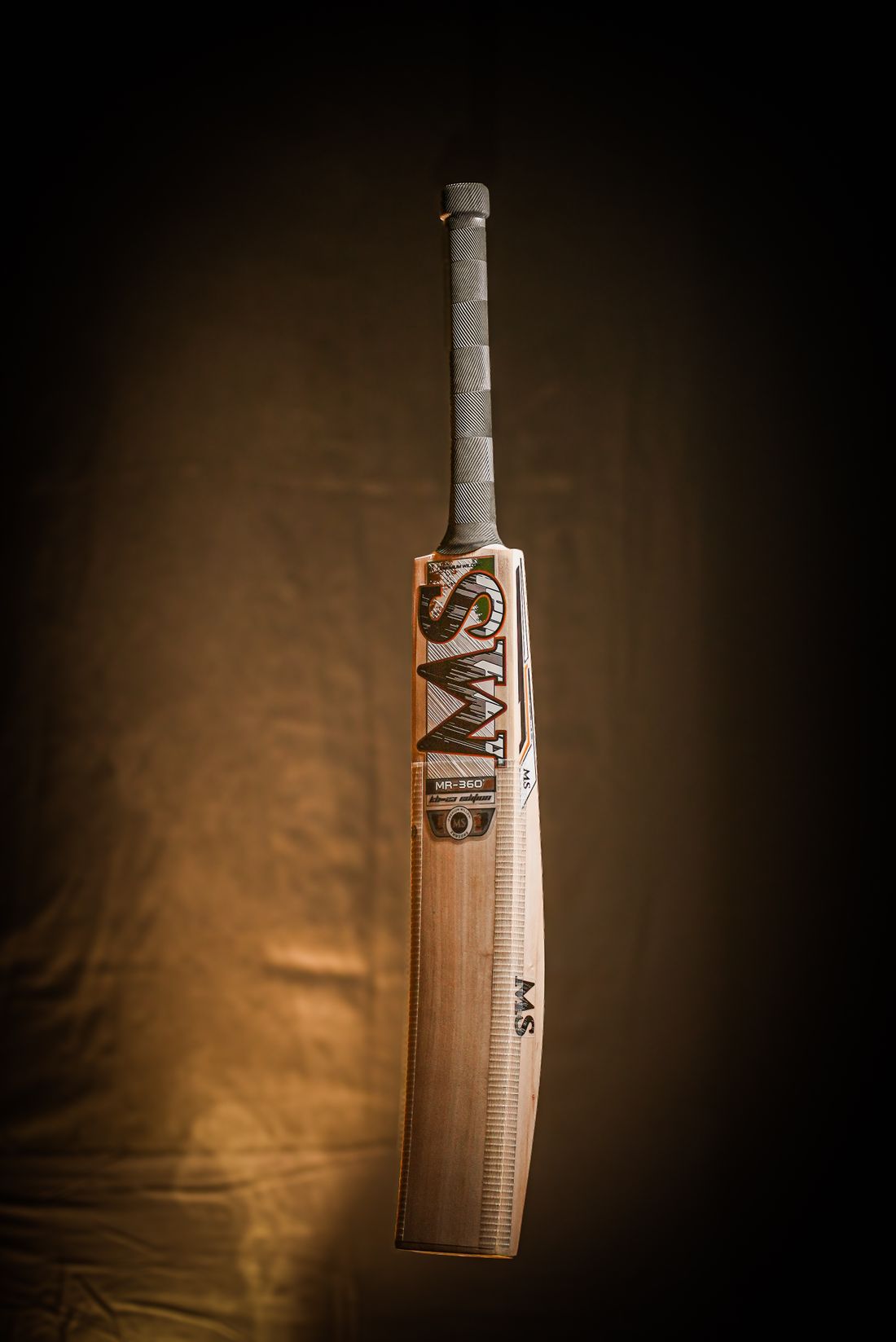
What a profile description can tell you
Viewed from the side or back, a bat shows where its spine and blade thickness concentrate material. A lower middle places more of that profile nearer the toe; a higher middle moves it closer to the hands. Exact designs vary, so compare photographs and the actual product rather than labels alone. Some profiles distribute useful mass over a broader area. A description is a starting point for a fitting conversation, not a measurement standard shared by all makers.
Lower middles and fuller-length contact
A low-middle bat may appeal to players who often meet the ball lower on the blade, including some front-foot strokes. That does not mean it is automatically best for every slow pitch or every straight drive. The extra mass toward the lower blade may affect pickup, which can matter more than a theoretical contact advantage. Check whether the player can lift, present and recover the bat comfortably before selecting a profile based on the ground’s reputation.
Higher middles and shorter-ball contact
A higher concentration of mass can appeal where contact often occurs farther up the blade. Some players also like the handling sensation of such a profile. Do not confuse this with permission to swing indiscriminately at short bowling. Shot selection, balance and protection remain essential. Test a normal defensive movement as well as a horizontal-bat shadow stroke. A profile should support the full range of the player’s cricket rather than one imagined highlight shot.
Where does a mid-middle bat fit?
A broadly central profile is often described as versatile, but that word still requires individual comparison. A player learning several basic strokes may appreciate a manageable all-round feel instead of buying for a highly specialised contact zone. Inspect the actual shape and handle setup. Two mid-middle bats can have noticeably different pickup because of their length, width, spine and overall weight. There is no need to force every bat into a simple three-box ranking.
Find your usual contact area without damaging the bat
Use ordinary practice observations to identify which contacts you are trying to accommodate. Note the stroke, the delivery length and where the ball met the blade; a low contact from a forward stroke answers a different question from a high mark left by a mistimed short ball. Repeated marks are a clue to discuss with a coach, not an instruction to buy the profile advertised around that height. A delivery-judgement or timing issue may be the more useful problem to work on. Observe a bat already prepared for its intended use; do not strike an unprepared blade or remove a covering merely to create a contact map.
The common mistake: buying for someone else’s pitch
Professional players use individually chosen equipment and encounter conditions that may differ greatly from a beginner’s nets. Copying their profile without considering your own height, strength and contact can produce a bat that feels unwieldy. Start with fit and a normal movement test, then choose among suitable profiles. If uncertain, describe your actual cricket to the retailer rather than repeating marketing phrases. Specific observations such as late bat movement are more useful than demanding maximum power.
A practical comparison before deciding
Select two or three bats of suitable length and broadly comparable weight. In gloves, perform the same gentle sequence with each, noting pickup, balance and how easily the face returns straight. Read the profile specifications only after recording the feel so the label does not dominate the comparison. Ask about intended ball use and preparation. Choose the bat that works across your ordinary movements; do not make a minor sweet-spot preference override a clear fitting problem.
Translate profile language into a question about contact
| Situation or feature | Useful check | Avoid this assumption |
|---|---|---|
| Low middle | Is your usual controlled contact relatively low on the blade? | A low profile guarantees success on every slow pitch. |
| Mid middle | Do you want a general-purpose balance across several ordinary strokes? | A central label makes all bats handle alike. |
| Higher middle | Does your actual cricket regularly create suitable higher-blade contact? | A high profile turns any short ball into a scoring shot. |
| Large edges or spine | How does the finished distribution feel through your movement? | Visible bulk alone proves a larger useful contact area. |
Use your contact pattern without pretending it is laboratory evidence
Look at ordinary contact marks from appropriate practice only after the bat has been prepared for that use. Note the region repeatedly used, the strokes attempted and the ball and surface involved. Do not strike selected parts of a new bat harder to create a more impressive pattern. Marks are observations about those sessions: they can reflect technique, delivery length and mistiming as well as the profile. A coach can help interpret why a player repeatedly contacts outside the intended area before the player buys a different shape.
Consider a hypothetical player who practises on two surfaces. One produces fuller, lower contacts; the other produces shorter deliveries and more back-foot strokes. A manageable general-purpose bat may be a sensible compromise, particularly if changing bats would create unfamiliar handling. The example does not establish one optimum profile or claim that buying two bats is necessary. It shows why a choice should reflect the mixture of cricket actually played rather than a single memorable professional stroke.
During a shop comparison, keep length and manageable weight broadly comparable before drawing conclusions about middle position. Otherwise a lighter blade may feel easier for reasons unrelated to the advertised sweet spot. Use the same gloves, modest backlift and controlled return each time. Ask what the profile description means for the actual model and whether the item shown online is the individual bat. A profile is a useful design description; the purchase still needs to be a workable finished implement rather than a promise of automatic timing.
Choosing a profile from your actual cricket
- Identify the cricket and strokes most often encountered.
- Review contact patterns with their session context.
- Compare similar-length candidates through controlled handling.
- Choose a manageable compromise if your conditions vary.
A practical example
A player expects a low middle to help front-foot drives but finds the first bat cumbersome. Another low-middle model with a different distribution is comfortable, while a central-profile bat also feels good. The decision comes from comparing individual bats rather than declaring that all low middles suit the same person.
Sources & scope
Equipment construction and instructions vary by manufacturer and model. Check the instructions supplied with your own item. This is an independent explanatory guide, not a product test, certification or brand endorsement.